
2023 Doctoral Dissertation Research Improvement Grants
The American Political Science Association is pleased to announce the Doctoral Dissertation Research Grant (DDRIG) Awardees for 2023 The APSA DDRIG program provides support to enhance and improve the conduct of doctoral dissertation research in political science. Awards support basic research which is theoretically derived and empirically oriented.
- Suhyen Bae, Duke University
- Clara Bicalho, University of California, Berkeley
- Aaron Christensen, Columbia University
- Sofia Elverdin, Yale University
- Bo Feng, Boston University
- Hanna Folsz, Stanford University
- Gustavo Guajardo, Rice University
- Yifan Flora He, University of California, Santa Barbara
- Minhye Joo, University of California, Riverside
- Dahjin Kim, Washington University in St. Louis
- Da In Diana Lee, Columbia University
- Jacob Lollis, University of Virginia
- Laura Lopez Perez, University of Notre Dame
- Mary McLoughlin, Syracuse University
- Preeti Nambiar, Vanderbilt University
- Jieun Park, University of California, Los Angeles
- RyuGyung Rio Park, University of California, Davis
- Melissa Pavlik, Yale University
- Ishana Ratan, University of California, Berkeley
- Andrew Roskos-Ewoldsen, University of California, Davis
- Oren Samet, University of California, Berkeley
- Daniel Smith, Ohio State University
- Sedef Topal, Washington State University
- Ye Zhang, Massachusetts Institute of Technology

Suhyen Bae is a Ph.D. candidate in the Department of Political Science at Duke University. In her dissertation project, she investigates how and why loneliness and social isolation shape political attitudes and behavior. She bridges together literature from social networks, health, and psychology to understand loneliness’ role in politics, focusing on political participation among other topics. In exploring these questions, she leverages large-scale surveys and survey experiments to examine both temporal and chronic dimensions of loneliness. Her framework posits that the relationship between loneliness and different modes of political participation is conditional on the temporal character of loneliness. Her other work explores online political behavior and the interplay between affect and cognition in influencing political attitudes. In a forthcoming book, The Fundamental Voter (2024, Oxford Univ. Press), she and her coauthors identify five fundamental forces shaping the American electorate by broadening the partisan cleavage and consequently fostering a growing emotional reaction. Before Duke, Suhyen graduated with an M.A. and Bachelor’s degree in Political Science and International Relations from Seoul National University.
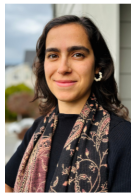
Clara Bicalho is a PhD candidate at the University of California, Berkeley. Her dissertation studies collective landholding communities in Latin America, the determinants of titling and its political effects. Her work considers bottom-up electoral and mobilization processes as well as top-down incentives to influence the outcome and extent of titling. She also examines shifts in local institutions and individual-level preferences and attitudes related to identity, self-rule, and political participation as a result of titling status. Her empirical analyses focus on the case of Brazilian quilombos, afrodescendant communities organized around collective landholdings. Clara’s work draws on experimental methods, original survey data, and in-depth interviews. At its core, her research is concerned with understanding the barriers, benefits, and pitfalls of inclusionary reforms that recognize collective rights to indigenous and afrodescendant communities and how these interact with existing forms of self-governance. Prior to graduate school, Clara worked as a predoctoral fellow at the Institutions and Political Inequality unit at the Berlin Social Science Center (WZB) and as a research assistant at NYU’s Center for Technology and Economic Development. She holds bachelor’s degrees in political science and in Arab Crossroads Studies from NYU Abu Dhabi.

Aaron Christensen is a PhD candidate in the Department of Political Science at Columbia University. He studies state-building and the political economy of development, with research concerning Africa and the Middle East. His dissertation asks when do citizens choose to register their identities and properties with the state, and what are the consequences of their choices for state-building and public services? Providing information to the state can help citizens to access services and protect their property rights. However, giving the state information puts citizens at risk of tax liability or discriminatory state policies. He argues that the decision of whether to provide information to the state depends on citizens’ own trust in the state and the availability of alternative, non-state property rights protections. The first component of his dissertation focuses on historical land registration in Tunisia in the 1950s and 1960s, which proceeded rapidly but unevenly as part of a broader postcolonial state-building project. He aims to understand why some Tunisian landowners chose to voluntarily register their land despite the significant risk of state expropriation. The second component of his dissertation focuses on contemporary Côte d’Ivoire. He studies how regime changes and conflict have altered patterns of who chooses to register their identity and property in the country. Methodologically, he uses quantitative and geospatial analyses using archival and administrative data, as well as randomized experiments. Prior to his PhD work, he received a B.A. in International and Area Studies from Washington University in St Louis.

Sofia Elverdin is a PhD Candidate in Political Science at Yale University. Her research focuses on gender, politics, and social movements. Specifically, Sofia studies women’s political engagement, in particular non-electoral and contentious modes of participation, with a regional focus on Latin America. Her book-length dissertation seeks to understand a critical open question in the literature of social movements: what sustains movements over time, particularly after they achieve desired legislative or policy change? To do so, Sofia’s dissertation focuses on two major feminist movements in the Argentine context: Ni Una Menos (“Not one [Woman] Less”), a movement protesting femicides and gender-based violence; and the abortion rights movement, also known as the “green wave.” Her research relies on mixed methods, combining qualitative methods with survey experiments to understand the micro-foundations of political engagement over time. In a second strand of research, Sofia focuses on the implications of social movement strength for the implementation of doctrinal policy, particularly abortion legislation. Sofia holds an M.A. and a B.A. in Political Science from Universidad Torcuato Di Tella. Prior to Yale, she was a fellow at the National Scientific and Technical Research Council (CONICET) in Argentina.

Bo Feng is a Ph.D. candidate in the Department of Political Science at Boston University. His research interests mainly concern the political economy of bureaucracy, state, and authoritarian politics. He mainly uses statistical methodologies to examine how political leaders in single-party regimes allocation discretionary power over policymaking – the power to make or tailor policies contingent on specific conditions – to local bureaucratic subordinates. He argues that political leaders in authoritarian single-party regimes usually face a dilemma between delegation of policy discretion to effectively address local social challenges and preserving political loyalty from subordinate bureaucratic elites. To resolve this dilemma, political leaders would choose to strategically delegate discretionary power to local bureaucrats, depending on the interactions between elite competition and patronage connections within the political hierarchy. In his project funded by the APSA DDRIG, Bo examines such strategic allocation of discretionary power within the Chinese political system, by tracing and measuring the specificities in policy documents issued by Chinese local governments with text-as-data methods to determine the space for discretion by local bureaucrats. His research contributes to scholarly understanding of bureaucratic discretion and political-bureaucratic relations from a comparative perspective. His research is also motivated by his prior fieldwork using semi-structured interviews with local bureaucrats in China. Before joining Boston University, he received a B.S. in Pharmacy from China Pharmaceutical University, and a Ph.D. in Economics from Fudan University, China.

Hanna Folsz is a PhD candidate at Stanford University. Interested in the challenges and opportunities in countering democratic erosion, her dissertation examines opposition parties’ electoral strategies in democratic backsliding. Why do opposition parties in countries experiencing democratic backsliding so often adopt campaign strategies that doom them to failure? As Hungarian democracy has progressively eroded in recent years, opposition parties have increasingly employed a counterproductive campaign strategy of strong rhetorical attacks on the governing party and neglected policy issues that mattered most to the majority of voters. This strategy runs counter to the prediction of moderation by spatial competition theories and findings that political insults are overall unpopular and demobilizing. Motivated by this puzzle, her dissertation develops and tests a new theory of opposition parties’ electoral strategies in backsliding. After demonstrating that opposition parties use increasingly negative, polarizing campaign messages in backsliding settings and this is not explained by popular demand, it proposes two supply-side explanations. First, it argues that the increasingly unequal electoral playing field in backsliding regimes leads opposition parties to contest elections for survival, rather than victory, and campaign with extremely negative, uncivil anti-regime rhetoric to appeal to and thus retain core, radical opposition supporters, further alienating moderate, non-partisan citizens. They can only escape these survivalist pressures if external factors weaken regime support while elections have remained sufficiently competitive. Its second explanation argues that as backsliding progresses, opposition parties’ activist and politician base become increasingly radical because growing concerns about employment and economic status deter moderates from political candidacy and activism. Empirically, her dissertation studies Hungary’s advanced backsliding and Poland’s opposition electoral success after moderate backsliding setting. Her multi-method approach combines text analysis of a new, large-scale corpus of campaign messaging, observational analyses using a natural experiment, an original conjoint survey modelling an opposition primary election, an experimental elite survey, and interviews.

Gustavo Guajardo is a Ph.D. candidate in the Department of Political Science at Rice University. His field of study is Comparative Politics, and his research agenda broadly focuses on electoral institutions, legislative behavior, and anticorruption policies in Latin America. His dissertation explores the conditions under which politicians advance anticorruption reform. Unlike other policies, anticorruption reform poses a unique dilemma for politicians: while an anticorruption agenda is popular with voters and could credibly be advanced by politicians across the ideological spectrum to win votes, anticorruption policies carry a high level of personal risk. Despite these risks, anticorruption reform does take place. Under which conditions do politicians advance anticorruption reform? He argues that since anticorruption policies can be risky, advancing anticorruption reform will depend on the extent to which electoral incentives compensate for the costs of advancing anticorruption reform. The dissertation uses a combination of observational and experimental methodologies to provide support for expectations. Using an original dataset on anticorruption initiatives (ACIs) introduced to subnational legislatures in Mexico, the first chapter explores whether electoral incentives impact anticorruption bill sponsorship by leveraging a natural experiment—a reelection reform that created subnational variation in reelection incentives. The second chapter takes a closer look at the content of ACIs and theorizes that legislators will be more likely to support ACIs with innocuous consequences since these pieces of legislation have the appeal of signaling anticorruption efforts without significantly changing the status quo. Using data on ACIs introduced to 10 Latin American legislatures, this chapter classifies legislation based on its scope and consequences, exploring whether the strength of legislation impacts legislative support for ACIs. Finally, the third chapter uses survey experiments to explore 1) whether respondents reward politicians for anticorruption efforts, 2) whether they distinguish between costlier efforts, and 3) whether they prize punitive actions over preventative ones. He holds a B.A. in Political Science from Instituto Tecnológico Autónomo de México (ITAM) in Mexico City and an M.A. in Political Science from Rice University.

Yifan (Flora) He is a PhD candidate at the Bren School of Environmental Science and Management, University of California, Santa Barbara, with a research focus on land and natural resources governance in the Global South using causal inference methods and geospatial tools. As part of her dissertation project, she investigates how patronage affects forest law enforcement in Bolivia. She argues that deforestation is distributed as a patronage good by the government through two mechanisms: legalization and forbearance. These processes, in turn, lead to differential forest law enforcement by the forest agency, which then affects the deforestation behavior of interest groups with different lobbying powers. To test these hypotheses, she employs a mixed-method approach combining formal modeling, causal inference, and qualitative interviews. Another chapter of her dissertation investigates the unequal health impacts of illegal gold mining in the Brazilian Amazon. Before joining UCSB, Flora worked as a social scientist at Conservation International from 2018 to 2020, where she studied the diversity and dynamics of global area-based conservation governance systems. She received a Bachelor of Social Sciences from the University of Hong Kong in 2015 and a Master of Science in conservation ecology and environmental informatics from the University of Michigan in 2017.

Minhye Joo is a Ph.D. Candidate in the Department of Political Science at the University of California, Riverside. Her dissertation examines how contact with street-level bureaucrats impacts immigrant political incorporation in the United States. She argues that interactions with street-level bureaucrats provide one path for immigrants to learn how the new system works and how the new government perceives and treats them, which may affect the development of political attitudes toward the host country. She shows that positive interactions with street-level bureaucrats lead immigrants to perceive their host country as responsive and trustworthy, which encourages them to engage in politics in the host country. On the other hand, negative interactions will give the impression that the host country is unwelcoming and hostile, which discourages political activities in the host country among immigrants. She employs a mixed-method approach with semi-structured interviews, a large-N survey, and two survey experiments to explore the effect of contact with street-level bureaucrats on immigrant incorporation. The results from her dissertation project will contribute to promoting our knowledge about the socially and politically marginalized population of immigrants in American society. In addition to the APSA DDRIG, Minhye’s dissertation project is supported by the Dissertation Research Grants from the Russell Sage Foundation.

Dahjin Kim is a PhD candidate in the Department of Political Science at Washington University in St. Louis. Her research explores how political attitudes are shaped through digitalized forms of political communication, with a particular interest in attitudes toward misinformation. Her dissertation uses a combination of observational and experimental designs to study how group identities influence the spread and correction of misinformation within online communities in South Korea. Contrary to the common belief of echo chambers and filter bubbles lacking political argumentation, she finds that argumentation surrounding veracity of information and misinformation is frequent in peer-to-peer interactions in the online environment. Furthermore, the sense of group identity among members of the online communities, formed by common interests and repeated interactions, moderates the perceived level of persuasiveness of corrective messages coming from ingroup members. By highlighting the importance of peer-to-peer corrections of misinformation, her dissertation contributes not only to the academic discussion of misinformation and political persuasion, but also to the efforts to fight against misinformation more broadly. In addition to the APSA-DDRIG, her research has received generous support from the Weidenbaum Center on the Economy, Government, and Public Policy at Washington University in St. Louis. Prior to her PhD program, Dahjin graduated with a B.A. and an M.A. in Political Science from Seoul National University in South Korea.

Diana Da In Lee is a PhD candidate at Columbia University, specializing in American local politics, race and ethnicity politics, and political methodology. Her dissertation examines the candidate emergence process among racial minorities in the United States, studying the entire pipeline to power from the initial spark of interest to officially becoming a candidate. First, she explores the perception of political office jobs among average minority voters, where she identifies the barriers and motivations unique to each minority community through a survey experiment. Second, she focuses on minority individuals with low levels of political ambition. Through a partnership with a non-profit organization that trains and recruits minorities to run for office, she conducts two field experiments to investigate which motivating factors tangibly increase interests in candidacy. Third, she delves into the decision-making process of minority individuals who exhibit a high potential for running for office. Through in-person interviews with minority individuals who have participated in campaign training programs, she explores how their incentive schemes evolve over time. Here, she argues that while intrinsic motivations may prompt initial interest among minority individuals, strategic considerations become increasingly influential as they optimize their chances of winning. Lastly, she studies minorities who have filed for candidacy and explores how they leverage their identities for electoral advantage. Through both a large dataset of city council elections and a survey experiment, she assesses the nature and effectiveness of identity-based campaign tactics in securing votes. Beyond her substantive research, Diana is also interested in solving methodological problems, such as improving external validity in empirical analyses and applying machine learning methods to solve measurement problems.

Jacob Lollis is a Ph.D. candidate in political science at the University of Virginia. His research examines how legislators’ identities affect their lawmaking behavior. His dissertation project explores the relationship between lawmakers’ racial identities and their statements in committee hearings. Using text-based crowdsourcing and machine learning methods, he creates a novel measure of race-based content for legislators’ statements in over 25,000 committee hearings from the 105 th-117th Congresses. He argues that non-white lawmakers are more likely to engage in race-based representation in committees; however, intergroup contact effects may occur in committees with many nonwhite lawmakers, fostering race-based representation from both white and nonwhite lawmakers. Jacob will use the APSA DDRIG to fund text-based crowdsourcing to code race-based content from committee hearing transcripts. His other research projects explore the relationship between social class, LGBTQ+ identity, and legislative effectiveness, as well as how citizens’ social class backgrounds shape their attitudes toward legislative professionalism. Before attending the University of Virginia, Jacob earned a B.A. in Politics and International Affairs with a minor in Poverty Studies from Furman University.

Laura López-Pérez is a PhD candidate at the University of Notre Dame and a member of the Violence and Transitional Justice Lab. Her dissertation examines the puzzling fact that it is predominantly families of disappeared persons who organize and engage in collective action to demand justice for victims. Why, in most cases, are families of disappeared persons who mobilize for justice? Why do they stay mobilized even though the possibilities of locating their disappeared relatives constantly decrease, and sometimes even after locating them? Her research analyzes both uncertainty and solidarity as causal explanations of variation in the duration of mobilization of families of victims. She tests her argument in Mexico, currently the country undergoing arguably the largest criminal conflict in the world.
This project will have a direct impact in generating memory on the collective action processes of families of victims. Sustained activism makes it more likely to bring about justice for victims. Understanding the conditions that facilitate or imperil long-term participation is crucial for informing and accompanying the work of social movements seeking justice for victims in criminal wars. Amidst systematic violence against civilians, thousands of families of victims tell us that justice must not have to wait. She received her bachelor’s degree from the I nstituto Tecnológico y de Estudios Superiores de Occidente (ITESO) and her master’s degree from the Facultad Latinoamericana de Ciencias Sociales (FLACSO).

Mary McLoughlin is a PhD candidate in political science at Syracuse University. Their research spans international relations and American politics and focuses broadly on queer, trans, and feminist politics. Their dissertation examines the global rise of anti-trans politics with specific attention to the strategic collaboration between anti-trans traditionalist actors who view transness as a threat to patriarchal values and anti-trans feminist actors who view transness as an extension of patriarchal values. Diverging from the way existing transnational advocacy literature places the passage of policy as the primary goal of norm entrepreneurship, Mary argues that the ultimate goal of anti-trans advocacy is the creation of symbolic fodder upon which feminist and traditionalist actors respectively contest or strengthen the existing gender norms that structure larger gendered political identities, interactions, and institutions. Through qualitative discursive analysis of texts produced by transnational actors and organizations embedded within these advocacy networks, Mary examines the way anti-trans feminists and traditionalists balance their shared commitments to specific anti-trans policies with their ultimately contradictory gendered worldbuilding projects.
Mary holds an M.A. in political science from Syracuse University and B.A. in English Literature and Human Rights Studies from the University of Dayton. In addition to the APSA DDRIG, Mary’s work is supported by funding from Syracuse University’s Moynihan Institute of Global Affairs.

Preeti Nambiar is a PhD candidate in political science in Vanderbilt University. Her research focuses on impact of climate change on citizen-state interactions and state building. Her dissertation project studies how natural disasters shape government functioning in the long term in low and middle-income countries. The project, set in India, uses in-depth elite interviews, citizen surveys and focus groups to build and assess theory. Her research is supported by the APSA, Vanderbilt Graduate School of Arts and Science, Latin American Public Opinion Project, the Vanderbilt Department of Political Science and the Robert Penn Warren Center. Prior to Vanderbilt, Preeti worked in private equity investing in New York, London, Singapore and Mumbai, with a special focus on developing countries. She served as founding director for a not-for-profit advisory practice that fostered enterprise and equity in education in India. Preeti holds a Master’s degree in International Economics (Bocconi University), an MSc Financial Engineering (Carnegie Mellon University and Nanyang Technological University) and a Bachelor’s degree (Delhi University).

RyuGyung (Rio) Park is a PhD candidate at the University of California, Davis. Her research focuses on the international political economy of trade protectionism and environmental policies. Her dissertation, “Climatization of International Trade”, examines the behaviors of legislators, interest groups, and the public in the dual challenge of free trade and climate change. She asks: How does international trade affect the efforts to address climate change and vice versa? Is climate change legislation fueling a return of protectionism? To answer these questions, she first looks at whether a sudden increase in imports has an effect on the congressional roll call votes regarding environmental bills. Contrary to conventional beliefs, she finds that an increase in imports leads to more pro-environmental votes by the Members of Congress. Second, she further unpacks the causal mechanism between international trade and support for environmental policies by examining the interest group politics in the US. Third, she explores public opinion using experimental research design, for which the APSA DDRIG will be used. In this final chapter of her dissertation, Rio tests whether attaching protectionist measures contributes to public support for climate change legislation. In particular, she addresses both material and non-material reasons (such as nationalism and security concerns) to support protectionism in climate change legislation. Before joining UC Davis, Rio received a B.A. in International Relations (College of Liberal Studies) and an M.P.P. from Seoul National University.

Jieun Park is a Ph.D. candidate in political science at UCLA. Her research lies at the intersection of the politics of migration, gender politics, and East Asian politics. Her dissertation examines gender differences in immigration attitudes, highlighting gendered interpretation and labor market vulnerability as key to understanding gender differences in attitudes toward male and female immigrants. By taking gender aspects in both respondents’ and immigrants’ sides, she highlights the complexities of anti-immigrant sentiments and the importance of incorporating gender-sensitive approaches in immigration policy. In one of her dissertation projects, she demonstrates that Japanese women, who are often in more vulnerable and less professional jobs, exhibit increased hostility towards female immigrants when exposed to information emphasizing the economic necessity of these immigrants, using survey experiments and text analysis. Currently, she is working on several projects, including the examination of attitudes toward female emigrants in Asia, attitudes toward climate migration, and Asian-specific preferences in the US and Australia. Jieun employs survey experiments and computational social science, emphasizing text analysis. In addition to the APSA DDRIG, Jieun’s research is supported by the UCLA Initiativ